As metro networks rapidly expand across urban and semi-urban regions, the demand for high-performance metro coach components has never been greater. These components operate under continuous stress, carrying heavy passenger loads, enduring constant vibration, and facing exposure to pollution, humidity, and temperature variations.
What this really means is simple: the material used in metro coach manufacturing can’t just be strong. It needs to last, perform consistently, and reduce maintenance over time.
This is exactly where stainless steel stands out. Across modern transit systems, stainless steel has become the preferred material for metro coach components due to its strength, corrosion resistance, safety performance, and long lifecycle value.
Why Material Selection Matters in Metro Coach Components
Metro systems are long-term infrastructure investments. Once deployed, coaches are expected to operate efficiently for decades with minimal maintenance. Any compromise in material selection directly affects:
- Structural integrity
- Passenger safety
- Maintenance costs
- Operational reliability
Unlike static infrastructure, metro coach components are constantly in motion. They face dynamic loads, acceleration forces, braking stress, and environmental exposure, all at once.
So the material decision isn’t just engineering, it’s economic and strategic.
Stainless Steel for Metro Coach Components: Meeting Key Performance Requirements
Structural Integrity Under Continuous Load
Metro coaches are subjected to repeated loading cycles throughout the day. Passenger movement, acceleration, braking, and track conditions all contribute to structural stress.
Stainless steel offers an excellent strength-to-weight ratio, allowing metro coach components to maintain rigidity without adding unnecessary weight. This ensures long-term dimensional stability and reduces the risk of deformation.
Resistance to Corrosion in Urban & Coastal Environments
Urban transit systems operate in some of the harshest environments, pollution, moisture, and, in many cases, coastal air.
Traditional materials often require protective coatings to prevent rust. Stainless steel, on the other hand, forms a natural protective layer that resists corrosion.
For metro coach components, this translates into:
- Longer service life
- Reduced maintenance
- Consistent performance across environments
Fire Safety and Passenger Protection
Safety is non-negotiable in public transport systems.
In the event of high temperatures or fire exposure, stainless steel retains its structural integrity far better than many alternative materials. This makes it a reliable choice for critical metro coach components, where passenger safety is directly linked to material performance.
Fatigue & Vibration Resistance
Metro coaches experience continuous vibration and cyclic loading during operation.
Over time, weaker materials can develop cracks or fatigue-related failures. Stainless steel offers high resistance to fatigue, making it ideal for metro coach components that must endure repeated stress cycles without failure.
Long Service Life with Low Maintenance
One of the biggest advantages of stainless steel is its durability.
Because it resists corrosion, fatigue, and wear, metro coach components made from stainless steel require significantly less maintenance and fewer replacements. This reduces downtime and lowers lifecycle costs.
Sustainability & ESG Compliance
Sustainability is becoming a core requirement in infrastructure projects.
Stainless steel is 100% recyclable and retains its properties even after reuse. For metro systems aiming to meet ESG goals, stainless steel supports environmentally responsible manufacturing while reducing long-term material waste.
Stainless Steel vs Alternative Materials in Metro Coach Manufacturing
Stainless Steel vs Carbon Steel
Carbon steel provides strength but comes with a trade-off; it is highly susceptible to corrosion and requires coatings or treatments.
Stainless steel eliminates this dependency. For metro coach components, this means:
- Lower maintenance requirements
- Longer operational life
- Reduced lifecycle costs
Stainless Steel vs Aluminium
Aluminium is often considered for its lightweight properties. However, when it comes to structural strength and fatigue resistance, stainless steel performs better.
In high-load, high-frequency environments like metro systems, metro coach components made from stainless steel offer greater durability and reliability over time.
Applications of Stainless Steel in Metro Coach Components
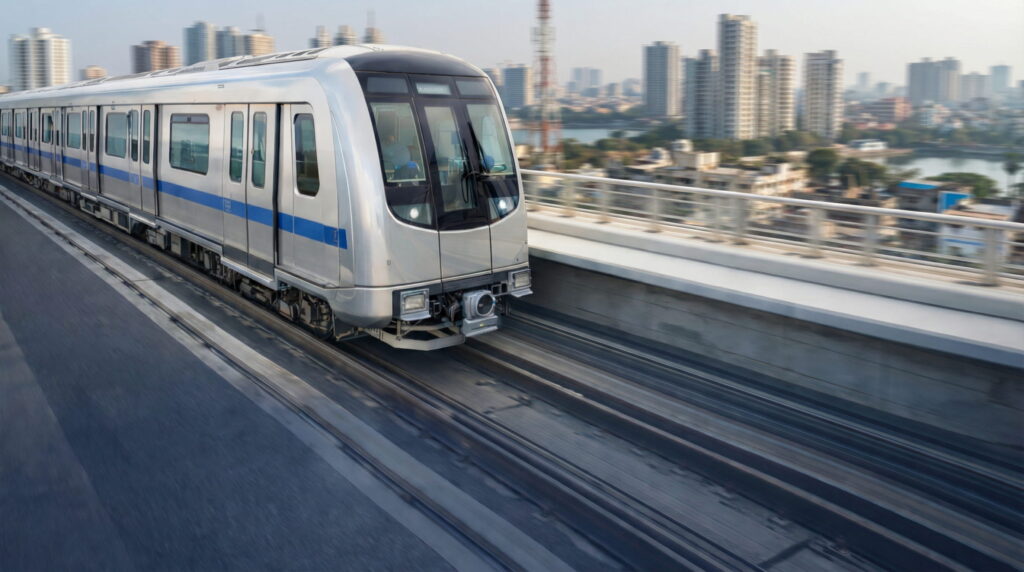
Stainless steel is used across a wide range of applications in metro coach manufacturing. These can be broadly grouped into key functional areas:
Structural Components
- Side walls
- Roof panels
- Underframes
- Car body structures
These form the backbone of metro coach components, requiring high strength and durability.
Critical Enclosures
- Battery boxes
- Air reservoirs
- Valve boxes
These components demand corrosion resistance and structural protection, both of which stainless steel delivers effectively.
Cable Management Systems
- Cable ducts
- Trunking systems
Stainless steel ensures long-term reliability and protection for electrical systems within metro coaches.
Interior & Passenger Safety Components
- Handrails
- Grab poles
- Mounting beams
- Seating structures
For passenger-facing metro coach components, stainless steel offers both safety and aesthetic durability.
Advanced Stainless Steel Grades Used in Metro Transit
Different applications require different material properties, which is why multiple stainless steel grades are used in metro coach components.
- 200 Series: Cost-effective with moderate corrosion resistance
- 300 Series: Excellent corrosion resistance and formability
- 400 Series: Higher strength and wear resistance
- Duplex Stainless Steel: Combines high strength with superior corrosion resistance
Grade selection depends on:
- Load requirements
- Environmental exposure
- Structural performance needs
Optimising these grades ensures that each component delivers maximum performance without over-engineering.
Engineering & Manufacturing Excellence at Jindal Mobility
At Jindal Mobility, the focus goes beyond material supply. The approach is centered on delivering high-performance metro coach components through engineering precision and manufacturing expertise.
Capabilities include:
- Advanced stainless steel fabrication
- Custom component design based on project requirements
- High-volume production with consistent quality
- Strict adherence to safety and performance standards
This combination ensures that every component is built to meet the demands of modern metro systems.
Conclusion
Metro systems are built for longevity, efficiency, and safety. The materials used in their construction play a defining role in achieving these goals.
Stainless steel has emerged as the preferred choice for metro coach components because it delivers where it matters most: strength, durability, corrosion resistance, and long-term cost efficiency.
When performance, reliability, and sustainability are non-negotiable, stainless steel is not just an option; it’s the standard.