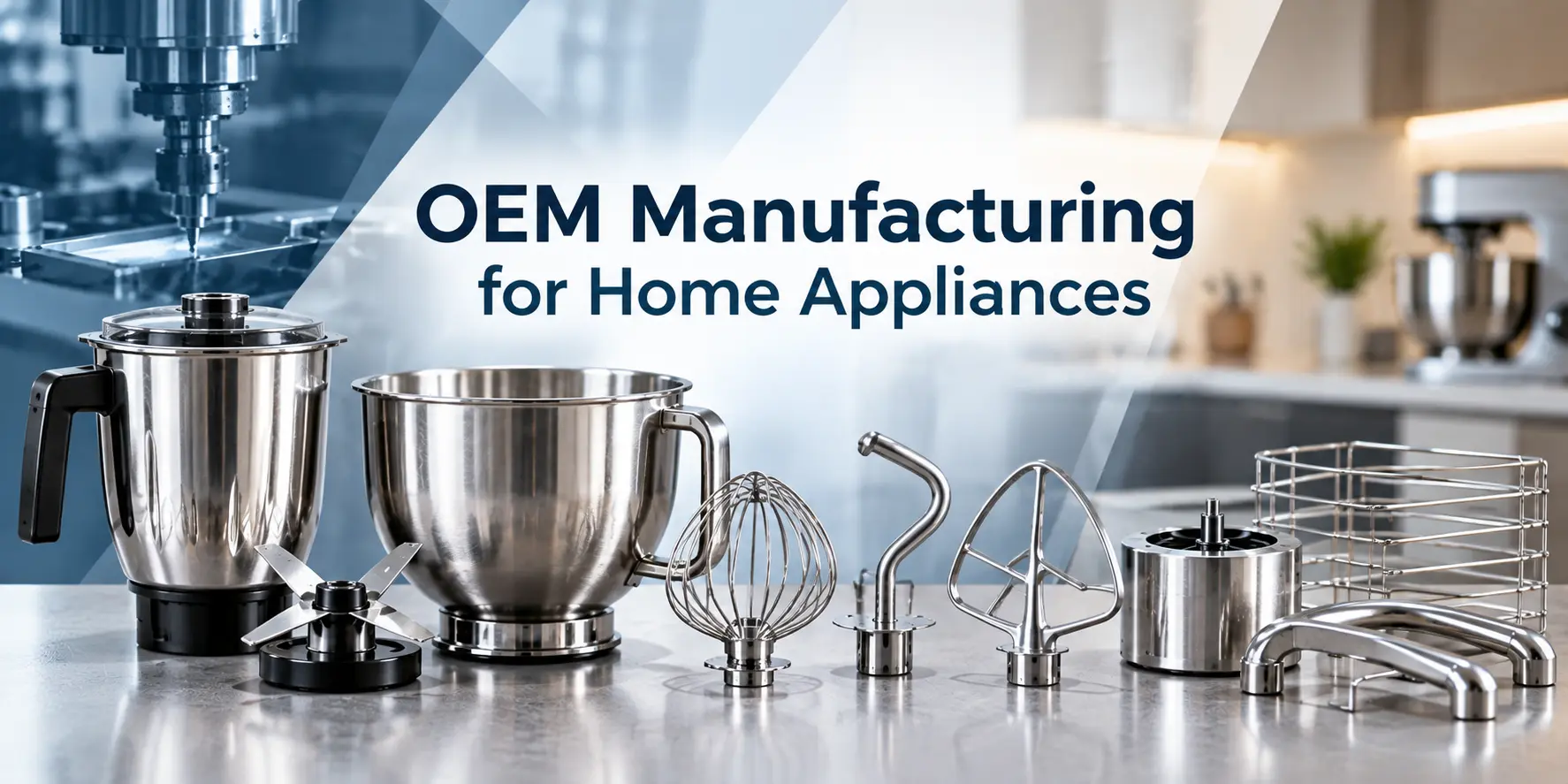
Original Equipment Manufacturers (OEMs) today are the silent giants of the globalized economy, producing many of the products we use in our daily lives. Whether it is house appliances, car parts, or even the MRI machines in hospitals, OEMs are the ones producing the fine-tuned components that actually make these innovations work. Their experience ensures that all products are reliable, safe, and scalable, allowing businesses to focus on design, branding, and customer experience, rather than the manufacturing process of a single part of the product.
In recent years, India has emerged as a preferred hub for OEM manufacturing. Partnering with the right Original Equipment Manufacturer in India offers global brands access to quality, scalability, and cost efficiency. Today, many global brands rely on leading OEM manufacturing companies in India to streamline production and maintain consistent quality standards. Leading OEM manufacturers in India, such as Jindal Lifestyle, are helping brands innovate faster while maintaining world-class standards. As a trusted OEM supplier, Jindal Lifestyle ensures global brands receive reliable, scalable solutions.
What Is an Original Equipment Manufacturer (OEM)?
The OEM full form is “Original Equipment Manufacturer.” It refers to a company that designs, engineers, and manufactures parts, components, or even complete products that are later used, assembled, or branded by another company. In contrast to conventional brands, OEMs are not interested in marketing, but in production, which entails the technical knowledge and infrastructure to bring products to reality. OEMs play a vital role in the global supply chain, ensuring precision, quality, and consistency for industries ranging from stainless steel and automotive, with a wide range of OEM products supporting everything from household appliances to automotive systems.
For example, a kitchen appliance manufactured in stainless steel by a well-known brand may have parts or finishes produced by an OEM, such as Jindal Lifestyle. Outsourcing manufacturing to an experienced OEM allows brands to focus on design, distribution, and customer interaction, ensuring that their products are consistent, durable, and of high quality. Essentially, OEMs are the unrecognized designers of many of the products we use daily.
Today, several OEM suppliers in India specialize in stainless steel, automotive, and healthcare products, helping international brands achieve precision engineering at competitive costs.
How Does OEM Manufacturing Work?
OEM manufacturing involves producing parts, components, or complete products based on another company’s specifications and requirements. The process typically includes:
1. Understanding Requirements: The client shares product designs, material requirements, and technical specifications.
2. Prototype Development: Samples or prototypes may be developed for evaluation and approval.
Manufacturing: Once approved, the OEM begins production using the required manufacturing processes and equipment.
3. Quality Control: Products undergo quality checks to ensure they meet the required specifications and standards.
4. Packaging and Delivery: The finished products are packaged and delivered to the client for branding, assembly, or distribution.
By working with a reliable OEM manufacturer, businesses can access specialized manufacturing capabilities and scalable production without investing in their own manufacturing infrastructure.
The Role of OEMs in Manufacturing
OEMs play a significant role in the modern production industry, offering specialized skills, cost-effective production, quicker time-to-market, scalable production, and innovation assistance. OEMs enable brands to focus on design, marketing, and customer experience, while ensuring consistent quality and reliability by managing their technical and manufacturing systems, especially across diverse OEM products.
Technical Expertise: OEMs have expertise in materials, production techniques, and quality control, which many brands may lack internally.
Efficiency in Cost: Outsourcing to an OEM helps in saving the heavy capital investment in machinery, labor, and production facilities.
Speed to Market: OEMs’ product development is faster, and brands can be introduced more quickly, allowing them to respond to market demands promptly.
Scalability: OEMs have infrastructure in place to scale production up or down according to demand, without compromising production quality.
Innovation Support: A large number of OEMs are engaged in product development, providing advice on design optimization, material selection, and production methods.
Across industries, OEM manufacturers in India are gaining recognition for their advanced capabilities and compliance with global standards. Their combination of technical expertise and innovation support makes them ideal long-term partners for international brands.
Understanding OEM Parts and Their Importance
OEM parts are components manufactured according to the original specifications and quality requirements of a product or equipment manufacturer. These parts are designed to ensure proper compatibility, performance, and reliability when used in the final product.
The importance of OEM parts includes:
Consistent Quality: OEM parts are manufactured according to defined specifications and quality standards.
Better Compatibility: They are designed to fit and function properly within the intended product or equipment.
Reliable Performance: Using accurately manufactured components helps maintain the overall performance and durability of the final product.
Industry-Specific Customisation: OEM parts can be developed to meet the specific requirements of industries such as automotive, appliances, healthcare, and industrial manufacturing.
For businesses, partnering with a reliable OEM manufacturer like Jindal Lifestyle helps ensure consistent production quality, precise manufacturing, and a dependable supply of components tailored to specific requirements.
OEM vs. ODM: Key Differences
Whereas OEMs manufacture goods through the design of another company, the Original Design Manufacturers (ODM) go an extra mile by offering the design and development of the products. Understanding the difference is important in businesses that are looking for manufacturing partners:
OEM (Original Equipment manufacturer): The manufacturer produces according to the design and specifications of the client.
ODM (Original Design Manufacturer): It designs and produces products that are later branded and sold to other companies.
The decision between an OEM and ODM is based on the extent of control that a brand desires in terms of design, innovation, and customization. When the brands need a stainless steel-specific product that can meet the particular market demands, the collaboration with an OEM like Jindal Lifestyle offers the perfect balance of precision, quality, and customization.
Types of OEM Manufacturing Models
OEM manufacturing can vary based on the level of involvement required from the manufacturer. Some common OEM manufacturing models include:
1. Component Manufacturing: OEM manufacturers produce specific parts or components that are used in another company’s final product.
2. Custom Product Manufacturing: Products are manufactured according to the client’s specific designs, materials, dimensions, and technical requirements.
3. Private Label Manufacturing: A manufacturer produces products that are marketed and sold under another company’s brand name.
4. Contract Manufacturing: A company outsources the production of specific products or components to a specialized manufacturer while retaining control over product specifications and branding.
The right OEM manufacturing model depends on factors such as product complexity, customization requirements, production volume, and the level of manufacturing support required.
Why Choose an OEM Manufacturer in India?
India has become a favored location for OEM manufacturing due to several persuasive factors. The nation provides a rare mix of affordable manufacturing, a highly qualified labor force, and advanced infrastructure, which is suitable for large-scale production. Additionally, India’s emphasis on innovation, high supply chains, and its strategic location in both local and global markets also enhances its standing as a dependable centre of OEM solutions across a wide range of industries.
Economical Manufacturing: Cheaper labor and operational costs would make production more affordable without compromising quality.
Qualified Labor Force: India has a great source of engineering and technical labor force, which guarantees quality manufacturing standards.
Advanced Infrastructure: The industrial centers of the country are limited with the modern factories, machinery, and logistics support.
Innovation and Research and Development: Numerous Indian OEMs invest in research and development, which helps in the improvement of products and design innovation.
Favourable Location: The geographical location of India enables effective management of the supply chain within the country and internationally.
Selecting an Indian OEM supplier would offer a competitive price to the brands, a stable production schedule, and availability of innovative solutions in manufacturing, which is essential for the final success.
Why India is a Growing Hub for OEM Manufacturers
The OEM industry in India has experienced a massive growth in the past decade, driven by various factors such as:
Government Interventions: Programs such as the Make in India have increased production capacity and brought foreign investments into the country.
Diversified Industry Foundation: India is a leading manufacturer of various types of electronics and automotive parts, as well as stainless steel kitchenware, which provides it with options for a diverse range of industries.
Quality Standard: Indian OEMs comply with international quality certifications, and therefore, their products meet global standards.
Export Potential: India places a strong emphasis on exports and has a good availability of products to meet the needs of global brands seeking quality manufacturing partners.
Such a growth path makes India one of the reliable destinations for OEM solutions, especially in areas that require perfection and quality, as in stainless steel production, where only perfection and quality matter.
7 Essential Qualities of a Reliable OEM Manufacturer
It is important to choose the right OEM manufacturer in order to succeed. The following are seven attributes that can be used to assess a good and efficient manufacturing partner.
1. Expert Knowledge: History of manufacturing quality components and products within the relevant industry.
2. Quality Assurance: Strong quality management, certifications, and international standards.
3. Innovation Capabilities: Ability to support product design improvements and provide technical advice.
4. Scalability: The ability to handle both small and high-capacity production without affecting the quality.
5. Reliability: On-time delivery, communication, and performance.
6. Cost-Effects: Competitive price, high quality, and service levels.
7. Customer-Centric Approach: Flexibility to suit the demands of clients and adapt to the dynamism in market needs.
Jindal Lifestyle possesses all these attributes and is therefore one of the most preferred companies for businesses requiring reliable OEM solutions of stainless steel in India.
How to Choose the Right OEM Partner
In choosing an OEM partner, companies must pay close attention to a number of essential criteria that would guarantee a long-term and sustainable partnership:
Experience and Knowledge in Relevant industries: Find OEMs who have a record of success in your type of product. This is because their experience makes them aware of the industry-specific challenges and enables them to provide solutions.
Quality and Certifications of the Products: There is no compromise on the quality of our products. Look at international certifications and compliance with international standards, which will ensure consistency, safety, and durability.
Customization and Scalability: The OEM should be able to adapt to meet specific design needs and scale production based on market demand without affecting quality.
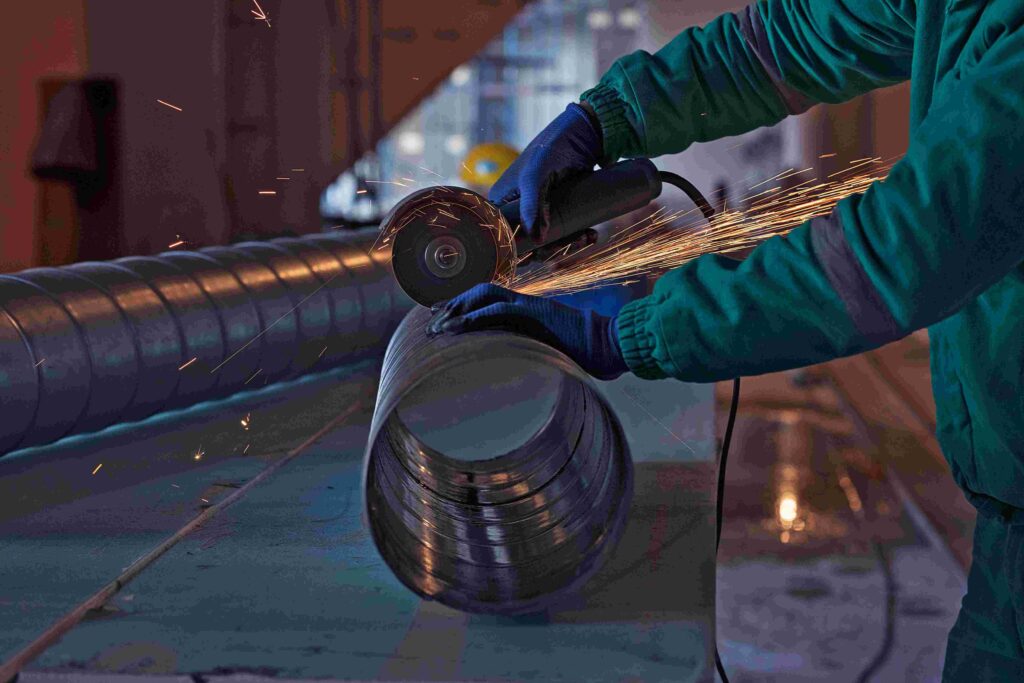
Technology & Infrastructure: A higher level of technology such as robotized welding, CNC machines, and automated polishing systems, proves that an OEM is capable of creating high-quality components that are precise and produced with effective efficiency.
Sustainability promises: Environmentally friendly manufacturing policies are long-term thinking. Select business partners who are dedicated to sustainable sourcing, energy conservation, and minimization of wastage.
Considering these points will help you select an OEM that not only fits the technical specifications but also fits your brand values and growth goals.
OEM Supplier vs OEM Manufacturer: What Is the Difference?
While the terms OEM supplier and OEM manufacturer are often used interchangeably, they can have different roles in the manufacturing process.
An OEM manufacturer produces parts, components, or complete products based on a client’s design, technical requirements, and quality standards. An OEM supplier, on the other hand, provides these OEM-manufactured parts or components to businesses as part of the wider supply chain.
| OEM Manufacturer | OEM Supplier |
| Focuses primarily on manufacturing products or components | Focuses on supplying products or components |
| May provide design and production support | Supports businesses with the supply of required components |
| Works directly on product requirements and manufacturing processes | Ensures the availability and delivery of OEM products |
In many cases, a company can perform both roles by manufacturing customised products and supplying them directly to businesses.
Jindal Lifestyle: A Leader Among SS Original Equipment Manufacturers in India
One of the subsidiaries of Jindal Stainless Ltd. is a 22-year-old company named Jindal Lifestyle, which is one of the largest integrated stainless steel solution providers in India. Jindal Lifestyle has a strong tradition of value engineering and state-of-the-art plants in Rohad and Pathredi, which makes the company a preferred OEM partner across various industries.
Expertise Across Industries
Whether it is household appliances, auto parts, or specialised OEM equipment used in hospitals, OEMs are responsible for producing the precision-engineered components that power modern innovations.
Home & Kitchen Appliances – Sleek cookware, cutlery, modular fittings, mixer bowls, and sinks.
Automotive – Stainless steel high-performance automotive OEM components, IATF-certified.
Healthcare – Medical-grade hygienic stainless steel OEM equipment that is safe, durable, and manufactured to meet strict industry standards.
Retail & Hospitality – Custom stainless steel display platforms and high-end kitchenware, as well as design-based innovations for the retail and hospitality sectors.
With its expertise, infrastructure, and focus on innovation, Jindal Lifestyle continues to set benchmarks among OEM manufacturers in India, offering stainless steel solutions trusted by leading domestic and international brands.
Conclusion
OEMs have become essential in the modern manufacturing ecosystem in providing high-quality, innovative, and scalable products. They allow brands to specialize in what they are good at, which is marketing, distribution, and customer interaction, while ensuring the foundation of the product is as good as possible. India, having its own talented workforce, affordable infrastructure, and an increasingly strong image in the world, is the best place to partner in OEM.
Jindal Lifestyle is the most reliable company in the production of stainless steel among Indian OEMs, delivering exceptional OEM products with unmatched customization and quality. Selecting the appropriate OEM partner is not merely a business decision; it is a strategic choice that can significantly impact the success, efficiency, and expansion of any brand.
FAQs
1. What is the full form of OEM?
OEM full form is Original Equipment Manufacturer. It refers to a company that designs and manufactures parts or complete products that are later incorporated, assembled, or branded by another business. OEMs like Jindal Lifestyle focus on precision manufacturing, quality, and innovation to help brands bring their ideas to life.
2. What does an Original Equipment Manufacturer (OEM) do?
An OEM manufactures parts or products that are used by another company to assemble or brand as their own.
3. What Is OEM Equipment?
OEM equipment refers to machinery, components, or products manufactured by one company according to the specifications and requirements of another company. These products are often used as part of a larger system or sold under the purchasing company’s brand.
4. What is OEM in manufacturing?
OEM (Original Equipment Manufacturer) in manufacturing refers to a company that produces components, parts, or finished products according to another company’s specifications, designs, or requirements. The OEM handles the manufacturing process, while the client typically sells or integrates the products under its own brand.
5. What’s the difference between OE, OEM, and ODM?
OE (Original Equipment): The product as initially supplied.
OEM: Manufacturer that produces components for branded companies.
ODM: A company that designs and manufactures products, later branded by others.
6. Where are OEM parts used?
OEM parts are used across industries, including automotive, consumer appliances, medical devices, and hospitality equipment.
7. What is the Difference Between OEM and Aftermarket Parts?
OEM parts are created by the original manufacturer to ensure perfect fit, finish, and lasting quality. Aftermarket parts are made by other producers and may differ slightly in design or performance.
8. What is the role of OEM in maintenance?
OEMs provide authentic replacement parts and components that ensure performance, safety, and product longevity.
9. How do I choose the right OEM partner for my business?
Evaluate experience, certifications, quality standards, innovation capabilities, and sustainability commitments.
10. Does Jindal Lifestyle provide OEM solutions for both domestic and international markets?
Yes, Jindal Lifestyle serves both domestic and global clients with customized stainless steel OEM solutions.