In today’s highly competitive manufacturing landscape, businesses are constantly looking for ways to improve product quality, reduce operational costs, and scale efficiently. One of the smartest ways to achieve this is by partnering with the right OEM manufacturer partner.
Whether you are launching a new product line, expanding your existing portfolio, or entering a new market segment, your OEM partner plays a major role in determining how smoothly your operations run and how your brand is perceived in the market.
But choosing an OEM partner is not simply about finding a manufacturer with the lowest pricing. It is about finding a long-term partner who understands your business goals, maintains consistent quality, protects your intellectual property, and can grow with your business.
This is why asking the right questions before finalizing an OEM partnership becomes extremely important.
What is an OEM Partner?
An Original Equipment Manufacturing (OEM) partner is a company that manufactures products or components that are later sold under another company’s brand name.
In simple terms, the OEM partner handles the manufacturing expertise, while the business focuses on branding, marketing, sales, and customer relationships.
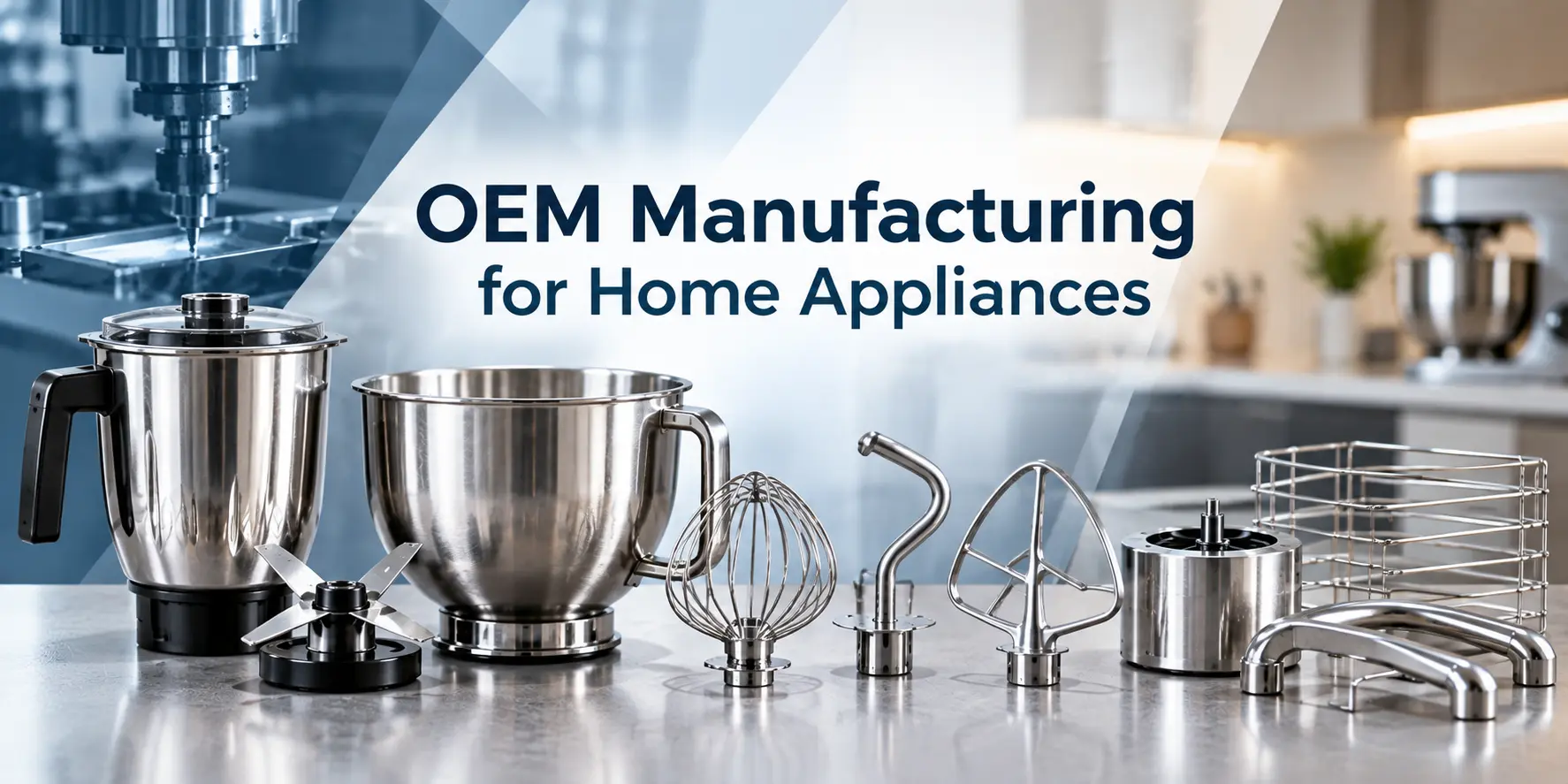
OEM partnerships are widely used across industries such as automotive, electronics, homeware, kitchenware, healthcare, and industrial manufacturing because they help businesses bring high-quality products to market faster and more efficiently.
How Does an OEM Partnership Work?
An OEM partnership typically begins with a business sharing its product requirements, specifications, design expectations, quality standards, and production volumes with the manufacturer. The OEM partner then supports product development, prototyping, sourcing, manufacturing, quality testing, and delivery. Once the product is approved, both parties establish production schedules, quality controls, communication processes, and ongoing supply arrangements.
Why do you need an Original Equipment Manufacturing (OEM) partner?
Building an in-house manufacturing setup requires massive investments in machinery, workforce, infrastructure, compliance, and supply chain management. For many businesses, this may not be practical or cost-effective.
An experienced OEM partner helps businesses:
- Reduce manufacturing costs
- Access advanced production technologies
- Ensure consistent product quality
- Scale production faster
- Speed up time-to-market
- Focus more on branding and business growth
- Minimize operational complexities
More importantly, the right OEM partner becomes an extension of your business rather than just a supplier.
Benefits of OEM Partnerships for Businesses
Working with a reliable OEM manufacturer offers several long-term advantages.
Faster Product Development
OEM partners often have established manufacturing systems, experienced engineering teams, and ready infrastructure. This allows businesses to launch products more quickly without starting from scratch.
Cost Efficiency
Instead of investing heavily in manufacturing facilities, businesses can utilize the OEM partner’s capabilities and optimize operational costs.
Access to Specialized Expertise
Experienced OEM manufacturers bring technical knowledge, industry insights, and product innovation capabilities that can improve product performance and quality.
Scalability
As market demand grows, OEM partners can help businesses scale production without significant disruptions.
Better Supply Chain Management
Established OEM manufacturers usually have strong supplier networks and streamlined logistics systems that ensure smoother production cycles.
Consistent Quality Standards
Reliable OEM partners maintain strict quality checks and standardized manufacturing practices, ensuring consistency across every batch.
Top 7 Important Questions Businesses Should Ask When Choosing an OEM Partner
1. What is your manufacturing expertise and industry track record?
Before entering into any OEM partnership, businesses should evaluate the manufacturer’s industry experience and technical capabilities.
Ask questions like:
- How long have they been operating?
- Which industries do they serve?
- What kind of products have they manufactured?
- Do they have experience handling large-scale production?
A strong industry track record usually reflects operational stability, technical knowledge, and manufacturing reliability.
2. What quality management systems and certifications do you have?
Quality is one of the biggest factors that impacts customer trust and brand reputation.
A dependable OEM partner should follow globally recognized quality standards and certifications. These may include:
- ISO certifications
- Quality testing protocols
- Material traceability systems
- Compliance with safety and regulatory standards
Businesses should also understand how quality inspections are conducted during different stages of production.
3. What is your production capacity and scalability?
Your manufacturing partner should be capable of meeting your current requirements as well as future growth demands.
It is important to evaluate:
- Monthly production capacity
- Manufacturing lead times
- Ability to handle seasonal demand spikes
- Infrastructure for scaling production
A scalable OEM partner helps businesses avoid delays, stock shortages, and operational bottlenecks.
4. What in-house design and engineering capabilities do you offer?
Modern manufacturing is no longer limited to production alone. Product development, customization, prototyping, and engineering support have become equally important.
An OEM partner with strong in-house design and engineering capabilities can help businesses:
- Improve product functionality
- Develop customized solutions
- Reduce development timelines
- Enhance product innovation
This becomes especially valuable for businesses looking to create differentiated products in competitive markets.
5. How do you manage supply chain risk and ensure reliable delivery?
Supply chain disruptions can severely impact production timelines and customer commitments.
Businesses should understand:
- How raw materials are sourced
- Whether backup suppliers are available
- How inventory planning is managed
- What systems are used to monitor logistics and delivery timelines
A well-managed supply chain ensures consistency, reliability, and uninterrupted operations.
6. How are Intellectual Property Rights and Commercial Usage Rights Protected?
Protecting product designs, technical specifications, and brand assets is critical in any OEM partnership.
Businesses should clearly discuss:
- Non-disclosure agreements (NDAs)
- Intellectual property ownership
- Product exclusivity clauses
- Commercial usage permissions
- Data security protocols
A transparent OEM partner will always prioritize confidentiality and legal protection.
7. How is Communication, Project Governance, and Ongoing Collaboration Managed?
Strong communication is often what separates a successful OEM partnership from a difficult one.
Businesses should understand:
- Who the key points of contact are
- How project updates are shared
- What escalation systems are in place
- How production timelines are monitored
- How problem-solving and collaboration are handled
An OEM partnership works best when both sides operate with transparency, accountability, and aligned goals.
How Jindal Lifestyle Aligns with These OEM Partner Criteria
Jindal Lifestyle has built its reputation by combining advanced manufacturing capabilities with strong design expertise and high-quality production standards.
With extensive experience in stainless steel manufacturing and home solutions, the company focuses on innovation, consistent quality, and scalable production capabilities to support evolving business requirements.
Jindal Lifestyle emphasizes:
- Modern manufacturing infrastructure
- Quality-driven production processes
- Product customization capabilities
- Strong supply chain management
- Collaborative partnerships
- Sustainable manufacturing practices
By aligning manufacturing excellence with long-term business collaboration, the company supports brands looking for reliable OEM solutions.
Conclusion
Choosing the right OEM partner is not simply a procurement decision. It is a long-term strategic investment that directly impacts product quality, operational efficiency, customer satisfaction, and overall business growth.
A reliable OEM manufacturer brings much more than production capabilities to the table. They contribute industry expertise, scalable infrastructure, quality assurance systems, supply chain stability, and collaborative innovation, helping businesses stay competitive in evolving markets.
By asking the right questions about manufacturing expertise, quality standards, scalability, engineering capabilities, supply chain management, intellectual property protection, and communication processes, businesses can make more informed, future-focused decisions.
The right OEM partnership creates a strong foundation for sustainable growth, faster market expansion, and long-term brand success. This is exactly why businesses should focus on building partnerships grounded in trust, transparency, quality, and shared business goals rather than selecting a manufacturer solely on price.
FAQs
1. What is the meaning of an OEM partner?
OEM partner meaning refers to a manufacturing relationship in which a business works with an external manufacturer to produce products or components according to its requirements. An OEM partnership can cover product development, manufacturing, quality control, customization, and ongoing supply.
2. What role does an OEM partner play within a B2B manufacturing ecosystem?
An OEM partner plays a critical role in helping businesses streamline manufacturing operations, improve product consistency, reduce production costs, and accelerate time-to-market. They often serve as an extension of the business by supporting production, engineering, quality control, supply chain management, and product development.
3. How does an OEM partner differ from a contract manufacturer or component supplier?
An OEM partner typically offers broader manufacturing expertise, product development support, engineering capabilities, and long-term collaboration. In contrast, a contract manufacturer typically focuses solely on production execution, whereas a component supplier primarily provides specific parts or raw materials rather than complete manufacturing solutions.
4. Why is intellectual property protection a critical consideration in OEM partnerships?
Intellectual property protection helps businesses secure their product designs, technical specifications, manufacturing processes, and brand identity from unauthorized usage or duplication. Strong confidentiality agreements and clearly defined ownership rights are essential for maintaining competitive advantage and protecting long-term business interests.
5. Which quality certifications and compliance standards indicate a reliable OEM partner?
Reliable OEM partners generally adhere to internationally recognized certifications and quality management standards, including ISO certifications, product safety compliance, material traceability systems, and standardized quality testing protocols. These certifications reflect a manufacturer’s commitment to consistent quality, operational efficiency, and regulatory compliance.
6. What should you look for in an OEM manufacturing partner?
Businesses should evaluate an OEM manufacturing partner’s manufacturing expertise, quality certifications, production capacity, engineering capabilities, supply-chain reliability, testing processes, IP protection, and communication systems before selecting one.